-
Opening the Conversation Early: A Preventive Approach to Teen Pregnancy in Plattsburgh through Family Medicine
Lauren Schiff
Short-term Project -
Gender Affirming Care within Primary Care in Northern New York
Julie Scholes
Short-term ProjectGender affirming care is an integral part of healthcare, but is often difficult to identify or access. Primary care providers have the skillset to provide gender affirming care but identify education and resources as barriers to start prescribing gender affirming hormone therapy. This project aimed to assess existing access to gender affirming care and identify areas for improvement and support to enhance accessibility to care in northern New York
-

Day 1 of Type 2 Diabetes Mellitus: A Patient-Centered Educational Tool
Isaac E. Sellinger
Short-term ProjectType 2 diabetes mellitus (T2DM) presents an overwhelming diagnosis for many patients, with a significant burden of education, lifestyle modification, and medical management required from day one. In Clinton County, NY, diabetes prevalence remains high, with disproportionately elevated rates of diabetes-related mortality and preventable hospitalizations compared to state averages. To address these gaps, a two-page, accessible, and actionable educational handout and accompanying clinical workflow tools for patients newly diagnosed with T2DM was developed. These materials were designed to integrate seamlessly with the existing after-visit summary (AVS) process at Champlain Valley Physicians Hospital Family Medicine Center. The project emphasizes small, achievable lifestyle changes, locally available resources, and goal-setting strategies to enhance patient engagement and build motivational inertia. Early implementation has shown that these tools are simple, well-received by providers, and practical for clinical integration. Future directions include assessment of long-term impact on patient outcomes, expanded patient feedback integration, and adaptation for use in other chronic disease management pathways.
-
New food for thought: Promoting updated concussion management guidelines
Ian A. Strohbehn
Short-term ProjectMany in the general public are only aware of outdated concussion management strategies which emphasize strict rest. These strategies may delay healing and increase incidence of post-concussion syndrome. Current guidelines recommend early return to light physical activity which can shorten time to recovery.
-

Supporting School Behavioral Health in the New Mainer Population
Eunice Suberu
Short-term ProjectThis project addresses the growing youth mental health crisis in Lewiston-Auburn, Maine, with a focus on refugee and immigrant adolescents. The intervention involved creating a culturally informed emotional regulation guide for middle and high school students. The guide was shaped through conversations with healthcare providers, youth, and community organizations, and aims to equip students with practical strategies to manage emotions and seek support. This work highlights the importance of trauma-informed, culturally competent approaches to behavioral health in school and community settings.
-
Improving Access to Halal Groceries in the Norwalk Area: A Community-Based Nutrition Resource
Zaymee Z. Syeda
Short-term ProjectThis project aims to increase awareness of culturally appropriate, affordable, and health-conscious grocery options for low-income and immigrant communities in Norwalk, Connecticut. By identifying SNAP-eligible stores that offer halal meat and healthy food choices, the project provides tailored guidance for navigating nutrition with dietary restrictions and chronic disease risks in mind.
Outreach included conversations with local store staff, food pantry coordinators, and shelter kitchen managers. The final resource is a printable guide with evidence-based ratings to support diabetes-friendly, heart-healthy, and weight-conscious choices
-
Hormone Therapy Education and Patient Empowerment in Menopause
Claudia Tarrant
Short-term ProjectThis project focuses on evidence-based education for patients going through menopause who are interested in learning more about symptomatic treatment options using menopausal hormone therapy. Many patients going through menopause are unaware that there are generally safe and effective treatments to help manage their symptoms. The goal of this project was to create patient centered, evidence based resources to help empower patients going through menopause and navigating treatment options.
-
Weight Management and Knee Osteoarthritis: A Practical Approach for Primary Care Patients
Adam B. Thompson
Short-term ProjectKnee osteoarthritis (OA) is a leading cause of disability, with obesity being the most significant modifiable risk factor for its progression. Weight loss has been shown to substantially reduce knee joint load, yet knee pain often limits physical activity, creating a challenging cycle. In Connecticut, 21.3% of adults have arthritis, and obesity rates have risen to 30%. The high cost of knee OA management, including knee replacements, underscores the need for preventive strategies to reduce financial and healthcare burdens. A one-page pamphlet was developed to provide evidence-based guidance on weight management and knee OA, incorporating recommendations from peer-reviewed literature and the American Academy of Family Physicians (AAFP). The pamphlet was distributed at a primary care clinic in New Canaan, Connecticut, offering information on beneficial exercises and local community resources for weight management. The pamphlet was made readily available to patients and well received by clinic staff. While direct patient feedback was limited, the intervention ensured that educational materials were accessible to those seeking guidance on weight management in the setting of knee OA pain. Future interventions should incorporate structured patient feedback, extend the distribution period, and expand availability to additional clinics and community centers.
-

Providing Vaccine Education to Immigrant and Refugee Populations in Bridgeport, CT
Lauren Tien
Short-term ProjectThe population of refugees, immigrants, and migrants (RIM) across the United States is under vaccinated. Under vaccination puts the individual and community at risk for preventable communicable diseases.
-
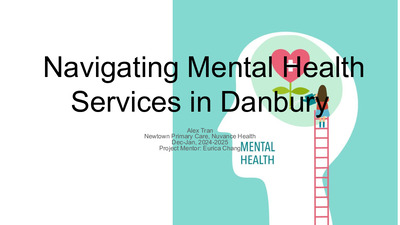
Guiding Steps for Accessing Mental Health Care Resources in Danbury CT
Alex Tran
Short-term ProjectMy work aims to offer easy to access resources for accessing mental health care in Danbury and Newtown, CT. It is aimed at newcomers to therapy, but is especially targeted as elderly patients who find navigating the system unfamiliar. By providing a rack card with basic information and scannable QR code with detailed steps, we hope to make this process less intimidating for patients in the area. Information was gathered from local therapists in the region and patient interview on what steps that found challenging or vague.
-
Improving Access to Mental Health Resources: A Community-Focused Patient Brochure for Primary Care in New Canaan and Norwalk
Kelly K. Tran
Short-term ProjectMental health needs are common in primary care, but stigma, insurance barriers, and provider shortages limit access to care. To address this gap at a local primary care clinic, I created a brochure listing local therapists, psychiatrists, insurance accepted, telehealth options, and key hotlines in New Canaan and Norwalk, Connecticut. Information was gathered through provider interviews and verified with trusted directories.
-

Gun Safety in Lewiston Maine FMR Clinic
Ryan Trus
Short-term ProjectCommunity project to help improve safe gun storage in Lewiston Maine
-
Closing the Gap in Mammogram Access
Selin Z. Tukel
Short-term ProjectBreast cancer care in Vermont is hindered by limited imaging access and limited patient understandings, creating disparities in timely diagnosis and treatment - education is key in solving this problem.
-

Addressing Polypharmacy in Older Adults in Primary Care
Genevieve T. Wakeman
Short-term ProjectPolypharmacy is a common problem affecting older adults, leading to increased medication burden, risk of falls and negative health outcomes, hospitalizations, and mortality. This community project attempts to improve medication management in older adults without increasing provider burden. A brief checklist was created to be included in provider note templates, prompting a consult with a clinical pharmacist if the patient meets criteria. Results have yet to be studied.
-

Expanding Access to Affordable Nutrition through Shelf-Stable Recipes in Brandon, Vermont
Shannon M. Wasley
Short-term Project -
Patient Education on Management of Acute Back Pain
Jonathon Woo
Short-term ProjectAcute back pain is one of the most common reasons for visit in the primary care setting. Back pain is a major contributor to disability and healthcare costs. Back pain can affect patients' quality of life through functional limitations and psychological stress regarding the severity and progression of back pain. This project aims to educate patients on the natural course of most cases of acute back pain as well as highlight various treatment options available.
-
Advance Directives: Continuing the Conversation
Abigail B. Wootton
Short-term ProjectAdvance directives (AD) are completed by only one third of US adults. There are broad financial, clinical, and emotional costs associated with this rate of AD completion. A review of a Vermont family medicine clinic demonstrated that approximately one fourth of patients had completed an AD. Community perspective from a local ambulance service highlighted the AD needs of patients served in this region. Interventions focused on physician-directed resources including informational handouts and electronic health record documentation templates. Results data was limited by lack of longitudinal access for implementation and assessment. Future studies should assess AD completion at this clinic through a more extensive retrospective chart review. Future studies should also evaluate rates of AD completion, patient and provider understanding of do not resuscitate (DNR) orders, and other areas for improvement in advance care planning.
-
Preventing Tick-Borne Illness in Seniors
Garrett Wu
Short-term ProjectOlder adults in New Milford, CT face elevated tick exposure from gardening, walking, and pet care. Studies have shown that permethrin-treated socks and shoes can reduce the likelihood of tick attachment. This project involved collaboration with the New Milford Senior Center and involved an educational presentation on tick prevention and a demonstration of safe permethrin sock treatment. Seniors received pre-treated socks, along with handouts on tick prevention. A short post-session quiz was administered to assess knowledge gained, confidence, and intention to adopt protective actions. All participants reported learning at least one new fact, and most planned to implement at least one preventive behavior. While long-term outcomes were not measured, consistent use of permethrin-treated socks, combined with simple daily tick checks and repellent use, has the potential to lower the risk of tick bites in the older adult population.
-
Exploring How GLP-1 and SGLT2 Medications Influence Appetite and Alcohol Habits
Josephine B. Yalovitser
Short-term Project -

Marijuana Use with Prescription Medication: Patient Education
Oliver Young
Short-term ProjectMarijuana use in Vermont has increased in recent years across all patient populations, but there is little understanding of the effects of marijuana use on medications. Vermont has the highest percentage of marijuana use in the country, and Windham county is among the highest in the state. Marijuana is metabolized by CYP450 enzymes in the liver, which are also responsible for metabolizing many other medications like SSRIs, benzodiazepine, blood thinners, opioids, beta-blockers, statins, and seizure medications. Marijuana can increase side effects and decrease the effectiveness of medications, which may be dangerous. The wide variety of medications, including the most prescribed medication in the US (statin), paired with the common use of marijuana means there is likely overlap in the populations who use both. This project aimed at educating patients at Grace Cottage Hospital in Townshend, VT, about risks of marijuana with prescriptions with the hope that it start conversations between patients and providers. Results of the project have yet to be studied.
-

Mole Patrol: Identifying Skin Cancer Risk Factors and Suspicious Lesions Documentation with a Smart Phrase
Amir Zafaranian
Short-term ProjectIntroduction
Skin cancer, specifically melanoma, is highly prevalent in Vermont. The state has the third-highest incidence rate of melanoma in the U.S. More relevant to the South Burlington Family Medicine Clinic is that Chittenden County has the fourth-highest age-adjusted incidence rate for melanoma in the state of Vermont and is unfortunately rising in comparison to the national average. This problem can likely be explained by a predominantly white and aging population, outdoor leisure, and poor sun protection in the winter months. Vermont is a rural state with all, but one county considered rural, and that a recent study found 88% of rural counties in the United States don’t have practicing dermatologists, the access to dermatologists for prevention through education and detection of skin cancers is limited. Therefore, primary care physicians are often tasked with these responsibilities. The project focused on the AHEC Core Principle of Medical Practice Transformation to support documentation and record keeping of skin cancer risk factors and documentation concerning lesions.
Methods
I developed an Epic smart phrase to be utilized in the primary care setting for documentation during preventative care or focused skin concern visits. This phrase outlines several key risk factors, as published by the Journal of the American Academy of Dermatology and noted by local Vermont dermatologists, and a checklist for information regarding skin cancer prevention for patient counseling. A survey was simultaneously distributed to the clinic’s providers at South Burlington Family Medicine for evaluation of effectiveness and feedback.
Results
2 providers responded, and 1 found it “very helpful.” Both providers perform focused skin exams in their practice. For the biggest challenges in dermatology referrals, they both identified long waits and limited access for their patients. One provider found it helpful to list risk factors during a visit.
Discussion
While this study only captured one clinic during a brief period, it highlights the importance of skin cancer detection in primary care, especially during a time when access to dermatology is difficult. Keeping in mind Vermont’s prevalence of life-threatening melanoma diagnoses, it is more important than ever to support primary care physicians in the surveillance and education of skin cancers.
-
Addressing Mental Health and Intentional Self-Harm in Afghan Patients
Muhammad H. Zeb
Short-term ProjectRefugee and immigrant populations in the United States are at an elevated risk for a variety of mental health challenges. Post-traumatic stress, social isolation, experiencing racism, and elevated unemployment are among the correlates of increased mental health risks, including self-harming and suicidal behaviors. Among other factors, recent Afghan refugees or immigrants may encounter these issues due to the limited experience and resources available for healthcare providers working with them. To support healthcare providers in delivering care that is evidence-based and culturally appropriate, an educational resource was developed for identifying and then providing initial care for the mental health needs of the Afghan population. Following a literature review, multiple experts in working with Afghan patients (psychiatrists, other mental health providers, and primary care physicians) were interviewed about providing assessment and treatment services for this population. This information was consolidated to create an educational resource that can be delivered as a self-directed E-Learning module to be broadly distributed. The expectation is that these materials will support healthcare and other providers in their efforts to deliver high-quality, culturally informed mental health care for the Afghan refugee population.
-
Improving Mental Health Accessibility in South Burlington
Leena R. Ziane
Short-term ProjectIndividuals in South Burlington continue to face difficulties accessing mental health services. Common barriers such as cost, wait time, and lack of cultural competence contribute to this difficulty. Exacerbation of mental health directly correlates to physical health. This project aims to address these barriers by developing a comprehensive handout highlighting available mental health resources counteracting each of these barriers and promoting inclusivity of diverse needs.
These projects were completed by students in the University of Vermont Family Medicine Clerkship. Block Clerkship Projects were completed during a five-week period, while Longitudinal Clerkship Projects were completed over the course of a 12-month longitudinal clerkship.
Printing is not supported at the primary Gallery Thumbnail page. Please first navigate to a specific Image before printing.